Ebola in the DRC: How Fear and Mistrust Drive Spread
Ebola in the DRC: How Fear and Mistrust Drive Community Spread
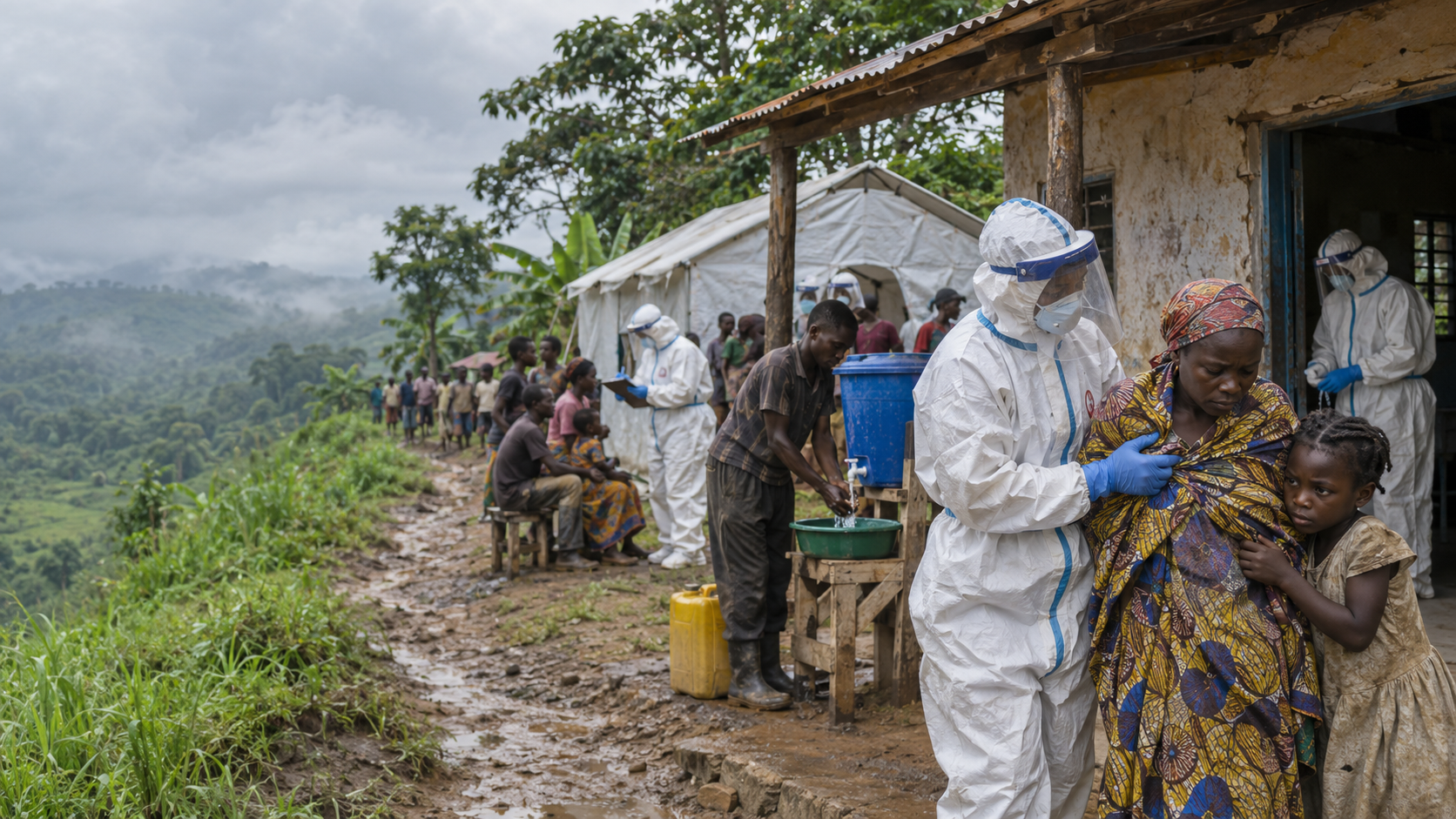
Ebola outbreaks are controlled through more than medicine. Rapid detection, laboratory testing, treatment, vaccination, contact tracing, infection prevention, safe burials, and community cooperation must work together. When fear and mistrust disrupt any part of that system, transmission can continue.
Fear does not transmit the Ebola virus biologically. It can, however, influence decisions that increase exposure, including delaying care, hiding symptoms, avoiding vaccination, moving away from monitoring teams, or preventing health workers from reaching affected areas.
The Democratic Republic of the Congo (DRC) has experienced repeated Ebola outbreaks, including the major 2018–2020 outbreak in eastern DRC. That response took place amid armed conflict, displacement, political tension, poverty, and deep institutional mistrust. The World Health Organization declared the outbreak a public-health emergency of international concern in July 2019 and ended the emergency in June 2020, after more than 3,000 reported cases and over 2,000 deaths (Source 1).
The central lesson is clear: communities are not obstacles to an Ebola response. They are essential partners. Public-health measures work better when people understand them, trust the people delivering them, and receive practical support to follow them.
What Makes Ebola Outbreaks Vulnerable to Fear and Mistrust?
Ebola’s severity creates intense fear
Ebola is a viral disease that can cause fever, weakness, vomiting, diarrhea, bleeding, and organ failure. Transmission usually occurs through direct contact with the blood or other bodily fluids of an infected person or through contaminated materials. The risk is especially serious when people care for sick relatives or handle the bodies of people who died from Ebola.
The disease’s severity makes symptoms, deaths, and rumors emotionally powerful. A community may see a relative become seriously ill within days while official explanations remain delayed or difficult to understand. In that environment, people often seek information from family members, religious leaders, neighbors, social media, or local political figures.
Fear can produce several harmful responses:
- Delaying a visit to a health facility.
- Hiding symptoms from responders.
- Moving between communities.
- Caring for a sick person without protective equipment.
- Avoiding vaccination or testing.
- Refusing to identify recent contacts.
- Participating in unsafe funeral practices.
These behaviors do not have a single cause. Misinformation can play a role, but so can poverty, poor access to care, previous discrimination, and legitimate concerns about how authorities operate.
Treatment and burial procedures can appear threatening
Ebola treatment centers often involve protective suits, masks, gloves, controlled entrances, isolation areas, and restricted contact between patients and families. These measures protect patients and health workers, but they can appear frightening when responders do not explain them clearly.
Families may feel excluded when a relative is taken to an isolation unit. They may not see the patient directly or receive timely updates. After a death, emergency burial procedures can appear impersonal or disrespectful, particularly when family members cannot perform familiar rituals.
Without transparent communication, necessary infection-prevention measures may be interpreted as evidence of wrongdoing. Families may believe that health workers are hiding information, causing deaths, or removing bodies without consent.
Respectful communication can reduce that suspicion. Where medically safe, families should receive clear explanations, regular updates, and opportunities to participate in burial decisions. Safe and dignified burial programs can protect communities while recognizing grief and cultural practices.
Conflict and displacement increase barriers
Conflict makes Ebola detection and treatment more difficult. Roads may be unsafe, health facilities may close, and response teams may be unable to reach villages. Displacement can separate families from their usual support networks and interrupt access to medical records, vaccination services, and reliable information.
Displaced communities may also face overcrowded living conditions, limited water supplies, and few nearby health facilities. These conditions make infection prevention more difficult, but they do not make displaced people inherently more likely to spread Ebola. The risk comes from disrupted services and reduced access to care.
Humanitarian organizations have warned that disease outbreaks in the DRC can place displaced people and host communities under additional pressure (Source 2). Effective Ebola planning must therefore include displaced-community representatives, mobile health services, interpreters, transport support, and communication in locally understood languages.
How Rumors and Misinformation Accelerate Community Spread
Rumors fill information gaps
Rumors spread quickly when people need answers and trusted information is unavailable. During Ebola responses, uncertainty may concern the origin of the disease, the purpose of treatment centers, vaccine safety, the cause of deaths, or the identity of people at risk.
A Nature report examined how rumors can spread faster than Ebola when official explanations fail to keep pace with community concerns (Source 3). Rumors often move through close social networks, where people trust the person sharing the information even when the claim lacks evidence.
Misinformation is false or inaccurate information shared without necessarily intending harm. Disinformation is false information deliberately created or distributed to mislead. Both can damage an outbreak response, but the response should distinguish between a frightened person asking a question and an organized effort to provoke violence.
Official communication can create an information gap when it is:
- Delayed.
- Delivered only in national or international languages.
- Too technical.
- Contradictory between agencies.
- Unclear about uncertainty.
- Inaccessible to people without internet or television.
- Focused on instructions without answering underlying concerns.
False claims can change health behavior
Ebola misinformation may discourage people from visiting treatment centers, accepting vaccination, reporting symptoms, or cooperating with contact tracing. Some people may seek informal treatment instead, while others may leave an area before health workers arrive.
A rumor can also reshape how people interpret ordinary events. If several patients die after reaching a treatment center, residents may conclude that the center causes death, even when patients arrived with advanced disease. If responders wear protective equipment, residents may interpret the clothing as proof that the team is dangerous rather than as a safety measure.
Not every refusal is caused by misinformation. People may reject care because transportation is unavailable, treatment is expensive, the facility is too far away, or previous responders treated them disrespectfully. A credible response must address both false claims and real service failures.
Repetition can make rumors seem credible
Repeated claims often feel more believable because of familiarity. A message shared by a relative, respected religious leader, or local health worker may carry more weight than a statement from a distant institution.
Rumors also gain strength when they contain emotional stories. A claim about a child, a death, or a grieving family can spread faster than a technical explanation of viral transmission. Corrective communication should therefore respond to the concern behind the rumor rather than simply labeling people ignorant.
Useful communication should:
- Identify what people are worried about.
- State the verified facts plainly.
- Explain what remains uncertain.
- Use trusted local messengers.
- Provide practical instructions.
- Correct claims without publicly humiliating those who shared them.
Why Communities May Distrust Ebola Responders
Historical and political distrust matters
Health messaging does not operate separately from politics, conflict, or institutional history. Communities may distrust responders linked to national governments, foreign organizations, security forces, or international donors.
In areas affected by armed conflict, residents may view any outside team through a political lens. Suspicion may also grow when authorities appear only during a crisis, make promises they cannot fulfill, or fail to investigate complaints.
Mistrust is not necessarily irrational. It may reflect previous experiences with corruption, discrimination, unsafe treatment, forced displacement, or inadequate government services. Understanding that history helps responders design better interventions.
Poor communication deepens suspicion
Communication failures can undermine even technically sound programs. Problems include:
- Using official languages that many residents do not speak.
- Giving instructions without allowing questions.
- Changing guidance without explaining why.
- Failing to acknowledge deaths or service limitations.
- Promising food, transport, or medical care that does not arrive.
- Excluding families from treatment and burial decisions.
- Publishing national statistics without explaining local conditions.
Trust depends on conduct as much as language. A health worker who listens, explains procedures, protects privacy, and returns with updates can build more confidence than a campaign that relies only on posters or broadcasts.
Unequal access makes advice feel unfair
People are less likely to accept public-health advice when they lack the resources to follow it. A person may be told to isolate but have no separate room, water supply, food, or income protection. A contact may be asked to remain available for monitoring while receiving no transport or financial support.
Economic pressure can force people to work, travel, attend funerals, or care for relatives despite health risks. Warnings alone cannot solve these constraints. Response teams must pair health guidance with practical assistance.
When Mistrust Turns Into Attacks on Health Workers
Violence disrupts outbreak control
During the eastern DRC Ebola response, health workers and treatment facilities faced attacks and other security incidents. Reports described angry mobs targeting responders, creating conditions that threatened access to affected communities (Source 4).
Violence can:
- Prevent medical teams from entering high-risk areas.
- Interrupt vaccination campaigns.
- Delay contact tracing.
- Force treatment centers to close.
- Reduce staffing.
- Block supplies and laboratory transport.
- Increase the number of undetected cases.
When responders cannot reach a community, suspected cases may remain at home or move elsewhere. Contacts may not be identified, and patients may arrive at facilities only after severe illness develops.
Violence has multiple drivers
Attacks may emerge from rumors, grief, political tension, perceived exclusion, frustration with security measures, or suspicion of foreign and government personnel. This context does not excuse violence. It shows why prevention requires more than adding security.
A response that ignores community concerns can increase hostility. Residents need ways to ask questions, report misconduct, challenge decisions, and influence local operations.
Security requires careful coordination
Protecting health workers is essential, but heavily militarized operations can intensify fear when communities associate responders with coercion. Security arrangements should be transparent and coordinated with trusted local leaders whenever possible.
Community-led access agreements, local recruitment, clear identification of responders, and advance explanations of security procedures can help maintain access without making health services appear punitive.
How Fear and Mistrust Affect the Chain of Transmission
Delayed treatment increases exposure
People who postpone care may remain at home while infectious. Household members may provide care without gloves, hand-washing facilities, or knowledge of how to avoid contact with bodily fluids. Transport workers, neighbors, and funeral participants may also be exposed.
Risk does not come from every casual interaction. It depends on the type, duration, and circumstances of contact. Clear risk communication should avoid both minimizing Ebola and portraying every interaction as dangerous.
Delayed reporting weakens contact tracing
Contact tracing identifies people exposed to a confirmed case, monitors them for symptoms, and connects them with care if illness develops. It is most effective when contacts trust the process.
Mistrust may lead contacts to:
- Refuse interviews.
- Provide incomplete information.
- Change locations.
- Avoid daily monitoring.
- Hide symptoms.
- Wait until illness becomes severe.
Contact tracing should not feel like punishment. Confidentiality, respectful treatment, transport, food, communication access, and protection from stigma make cooperation more likely.
Vaccine refusal can reduce outbreak control
Vaccination is an important Ebola-control tool, but it cannot stop an outbreak on its own. Gavi emphasizes that vaccination must be combined with rapid detection, treatment, contact tracing, infection prevention, and community engagement (Source 5).
Fear or misinformation may reduce vaccine uptake among eligible contacts and frontline workers. Other barriers may include distance, unclear eligibility, lack of informed consent, previous negative health-care experiences, or concerns about side effects.
Effective vaccination programs provide:
- Clear information about eligibility.
- Voluntary and informed consent.
- Convenient vaccination sites.
- Local-language communication.
- Follow-up for vaccinated people.
- Honest explanations of benefits and limitations.
Unsafe burials can create exposure
Bodies can remain infectious after death. Safe and dignified burial procedures therefore form a critical part of Ebola control. However, rushed or unexplained burials can intensify grief and suspicion.
Families should receive clear information about the process and, where safe, opportunities to participate. Burial teams should work with religious figures, family representatives, survivors, and local leaders to protect both public health and cultural dignity.
What an Effective Response Requires Beyond Vaccination
Rapid detection and laboratory confirmation
Fast testing helps distinguish Ebola from other illnesses and allows responders to isolate patients, begin treatment, and identify contacts. Delays increase opportunities for exposure and make planning less accurate.
Responders should explain what testing can establish, how samples are handled, and when results are expected. Transparent information reduces speculation and prevents every fever from being treated as proof of Ebola.
Accessible treatment and infection prevention
Treatment centers must be reachable, adequately staffed, and supplied with protective equipment. They also need trained workers, infection-prevention protocols, safe referral systems, and reliable transport.
Service quality affects trust. A community that sees patients treated respectfully and families updated regularly is more likely to view the facility as a source of protection rather than danger.
Contact tracing with support, not punishment
Contact tracing works best when people can cooperate without losing food, income, housing, or privacy. Support may include transport, household assistance, communication access, and protection from stigma.
Responders must also protect personal information. Public disclosure of names or exposure histories can drive people away from health services and encourage concealment.
Community engagement as a core intervention
Community engagement should begin before response messages are finalized. Local residents can identify unsafe procedures, language barriers, rumors, transport problems, and practical obstacles that external teams may miss.
Useful partners include:
- Local health workers.
- Religious leaders.
- Women’s groups.
- Youth representatives.
- Ebola survivors.
- Traditional leaders.
- Teachers.
- Displaced-community representatives.
- Local journalists and radio hosts.
Engagement is not a public-relations exercise. It is part of epidemiological control because community knowledge affects detection, referral, vaccination, contact tracing, and safe caregiving.
How Responders Can Rebuild Trust
Listen before correcting
Responders should first identify the concern behind a claim. A question may reflect fear, grief, political criticism, or a real service failure rather than deliberate misinformation.
Public shaming can drive people toward less reliable information sources. Corrections should be specific, respectful, and connected to action: where to seek care, whom to call, how confidentiality works, and what support is available.
Use trusted local messengers
Residents may trust familiar health workers, survivors, religious leaders, community organizers, or local radio hosts more than external officials. These messengers need accurate, consistent information and direct access to technical experts when difficult questions arise.
Communication should use local languages and culturally familiar examples. A message that people understand and can act on is more useful than a technically perfect statement that few residents can access.
Communicate uncertainty honestly
Guidance can change as scientists learn more or as an outbreak changes. Responders should explain:
- What is known.
- What remains uncertain.
- Why recommendations may change.
- When the next update will arrive.
- Where residents can verify information.
Acknowledging uncertainty can strengthen credibility when responders provide timely updates and explain decisions.
Demonstrate accountability
Trust improves when communities see that complaints produce action. Response programs should provide ways to report mistreatment, unsafe care, discrimination, corruption, or misconduct.
Leaders should explain how complaints are investigated and publish changes made in response to community feedback. Accountability turns engagement from a slogan into a visible practice.
Measuring Whether Trust-Building Works
Response teams can monitor:
- Time from symptom onset to care.
- Contact-tracing participation.
- Vaccination acceptance.
- Missed follow-up visits.
- Treatment-center referrals.
- Rumor patterns.
- Reports of stigma.
- Violence and access incidents.
- Community complaints and resolution times.
Numbers should be combined with interviews, listening sessions, and feedback from patients, families, survivors, health workers, and displaced communities.
Cooperation alone does not prove trust. People may comply while remaining afraid or unconvinced. A stronger assessment asks whether people feel heard, respected, informed, safe, and able to influence decisions that affect them.
Conclusion: Trust Is a Public-Health Tool
Fear and mistrust can increase Ebola transmission indirectly. They can delay treatment, weaken contact tracing, reduce vaccination, encourage unsafe caregiving and burials, and block health workers from reaching patients.
The answer is not to blame communities. The answer is to provide credible information, respectful services, practical support, local participation, and accountability. Vaccination remains important, but it must operate alongside rapid detection, treatment, infection prevention, contact tracing, and safe and dignified burials.
In the DRC and elsewhere, trust is not an optional communication benefit. It is a public-health tool that can determine whether people seek care, share information, accept protection, and help stop an outbreak.
Frequently Asked Questions
Can fear itself spread Ebola?
Fear does not transmit Ebola biologically. It can influence behavior, however. Delayed care, hidden symptoms, unsafe caregiving, avoidance of responders, and movement away from monitoring teams can create more opportunities for exposure.
Why might people distrust Ebola health workers?
Distrust may result from conflict, political tension, poor communication, unfamiliar treatment procedures, exclusion from burial decisions, previous institutional mistreatment, or association with foreign organizations and security forces. Understanding these concerns helps responders improve cooperation.
Can Ebola vaccines stop an outbreak on their own?
No. Vaccination works best alongside rapid diagnosis, treatment, contact tracing, infection prevention, safe and dignified burials, and community engagement. Eligibility and vaccine use depend on current public-health guidance.
How does misinformation affect Ebola response efforts?
False or misleading claims can discourage treatment, vaccination, testing, contact tracing, and cooperation with health workers. Effective responses use trusted local messengers, transparent explanations, respectful corrections, and practical support.
Why are attacks on health workers dangerous during an Ebola outbreak?
Attacks can prevent teams from reaching patients and contacts. They may delay diagnosis, treatment, vaccination, contact tracing, laboratory testing, and infection prevention. Protecting health workers while preserving community access is essential.
What can communities do to reduce Ebola transmission?
People should seek medical advice promptly when symptoms or exposure concerns arise, follow current guidance from trusted local health authorities, cooperate with contact tracing and vaccination teams when eligible, and avoid spreading unverified claims. Families should follow locally provided instructions for caregiving and burials.
Related Articles
-
 Early U.S. Flu Season: Regional Activity and What to Know
-
 U.S. Loses Measles-Elimination Status
-
 Doctors Question Reports of U.S. Babies Born With Measles
-
 What It Takes to Be a “Super Pooper”
-
 How to Counteract Loneliness Through Social Fitness
-
 Democrats Assail RFK Jr. Over Measles Status Loss
-
 Wisconsin Measles Outbreak Surpasses 650 Cases
-
 ACS Prostate Cancer Screening Guidelines Explained
-
 GLP-1 Medications During Pregnancy: What to Know
-
 How Measles Can Erase Immune Memory
-
 Why Congo’s Ebola Outbreak Spread So Quickly
-
 Reports of U.S. Babies Born With Measles Raise Alarm
-
 ACS 2026 Prostate Cancer Screening Guideline
-
 How Measles Makes the Immune System Forget
-
 Why Some Children Stay in Hospitals Without a Home
-
 Arizona Heat May Disrupt Brain Function, Scientists Warn