Hakeem Jeffries Nominated for House Speaker
Hakeem Jeffries Nominated for House Speaker: What the Vote Means
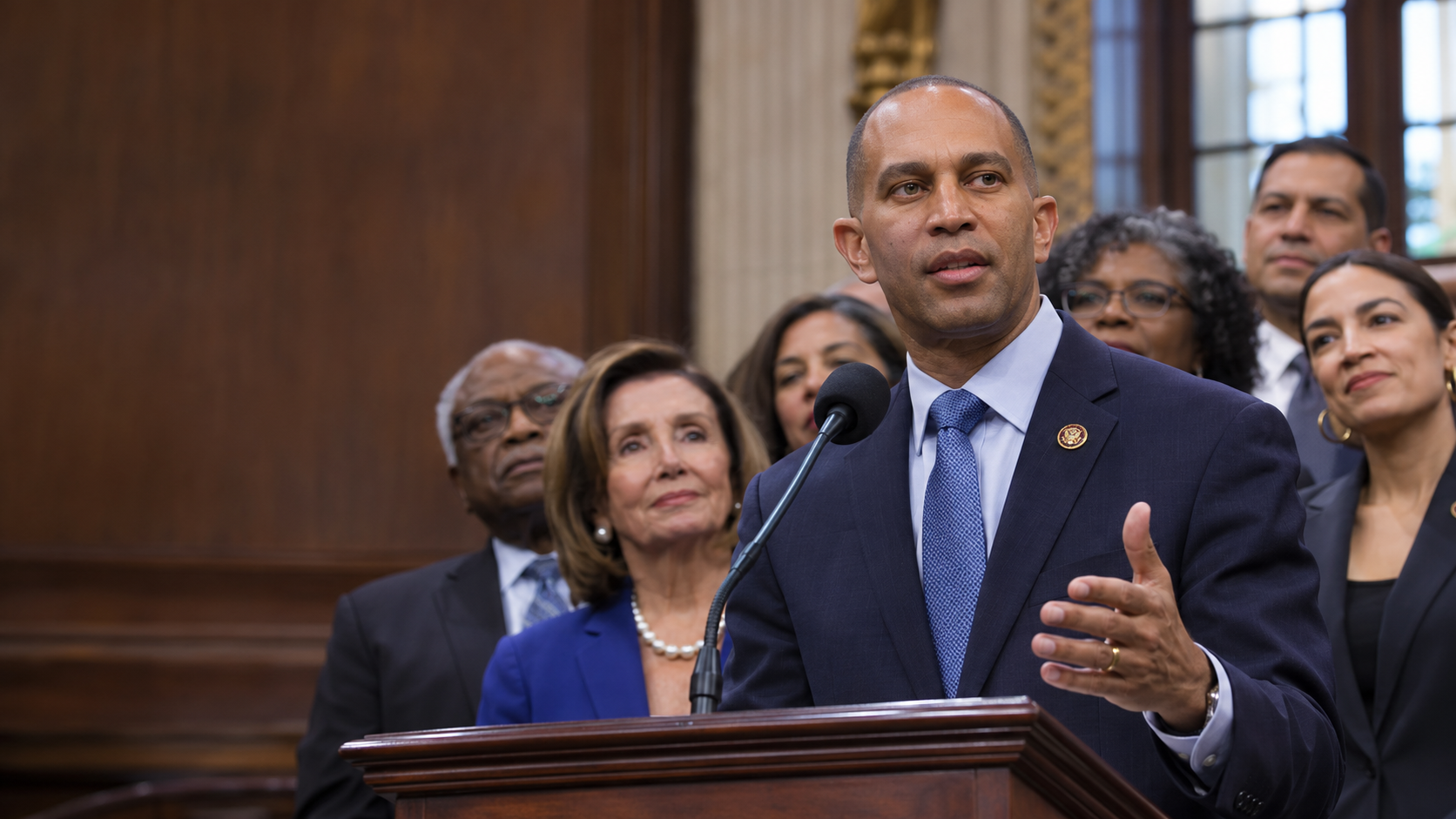
House Democrats nominated Minority Leader Hakeem Jeffries as their candidate for speaker, according to an NPR report published November 18, 2026. The nomination gives Jeffries a potential path to becoming the first Black speaker of the House if Democrats control the chamber and he wins the full House election. Source 3
The nomination is not the same as becoming speaker. House Democrats selected Jeffries as their party’s candidate, but the full House must hold a separate election. The outcome will depend on party control, attendance, defections, and the number of votes cast for each candidate.
CNN described Jeffries’ result as an overwhelming victory despite opposition from some progressive Democrats. Source 1 The vote therefore carries two messages: Jeffries retains broad authority within the Democratic caucus, but internal disagreements could shape future negotiations.
What the Democratic Nomination Means
The caucus nomination identifies the Democrat whom party members intend to support on the House floor. It does not legally install that candidate as speaker. The full House must conduct a separate election.
A candidate generally needs a majority of votes cast for an individual. Members can support another candidate, vote present, or be absent, depending on the circumstances and applicable House rules. Those choices can change the number of votes required to win.
The supplied reports describe Jeffries’ result as decisive but do not establish a precise vote total. That figure should be confirmed through the congressional record or the complete news reports before publication.
A Historic Opportunity
If Jeffries wins the full House election, he would become the first Black speaker of the House. The milestone would carry both institutional and symbolic significance.
The speaker presides over the House, controls much of its legislative schedule, influences committee assignments and party priorities, and manages negotiations over spending, oversight, procedural matters, and major legislation. The position requires sustained coalition management, particularly when the majority is narrow.
Jeffries has not yet reached that milestone. The available reporting confirms his nomination by House Democrats, not a successful chamber-wide election.
Progressive Dissent and Jeffries’ Influence
The nomination showed that Jeffries remains the central leadership figure for House Democrats. NBC News characterized the split as evidence of limits on the influence of progressive Democrats who opposed him. Source 7
The available summaries do not identify every dissenter or establish each lawmaker’s reasoning. The original Time and NBC News reports should be consulted before attributing specific objections to individual members. Vote behavior alone cannot show whether a lawmaker objected to Jeffries’ policies, strategy, leadership style, committee plans, or another issue. Source 5
The dissent should not automatically be described as an organized leadership challenge. Some lawmakers may have registered a policy objection without attempting to replace Jeffries.
A minority faction can still influence a leader without blocking a nomination. Members can withhold support on close floor votes, seek procedural changes, publicize disagreements, or condition cooperation on policy commitments. That leverage becomes stronger when the party’s margin is narrow.
The nomination nevertheless demonstrated that the opposition lacked enough support to prevent Jeffries from becoming the Democratic candidate. Progressive members can shape debate and demand concessions without controlling the caucus.
Why the Vote Matters
The internal vote may strengthen Jeffries’ bargaining position by demonstrating support to undecided members, allied groups, donors, and potential coalition partners. It may also discourage further leadership challenges and establish an expectation that Democrats will support their nominee in the full House election.
The result has clear limits. It does not bind every House member, guarantee attendance, settle policy disagreements, or prove that Jeffries has enough votes across the chamber.
If Jeffries becomes speaker, he will need to maintain unity among members who supported him and those who opposed him. That could require policy negotiations, meaningful input for dissenting lawmakers, and an agenda broad enough to hold together the Democratic coalition.
An opinion piece argued that Jeffries took a calculated risk by holding the caucus vote and that the decision succeeded. Source 9 That interpretation is analysis rather than an independently established fact, but the vote gave Jeffries a visible measure of caucus support.
What Happens Next
The next step is a chamber-wide speaker election. The election date, party breakdown, and applicable majority threshold should be verified before publication.
Jeffries’ prospects will depend on which party controls the House, the size of the majority, attendance, internal defections, and any cross-party support. If Democrats hold only a narrow majority, he may need to win back members who opposed his nomination or negotiate commitments on legislative priorities and procedure.
The speaker election may also preview future battles over federal spending, government funding, oversight, economic policy, social policy, and election-related legislation. Specific claims about negotiations or policy commitments require confirmation from additional reporting.
Broader Implications for Democrats
House Democrats include members with different ideological positions, regional interests, generations, racial backgrounds, and electoral pressures. Jeffries’ nomination showed leadership-level cohesion, while the dissent showed that unity has limits.
If Jeffries wins the speakership and governs effectively, the transition could strengthen Democratic leadership and continuity. If the floor election becomes difficult or defections continue, members may question whether the caucus can reliably control the chamber.
As a potential first Black speaker, Jeffries would face heightened scrutiny over representation, legislative results, party unity, coalition management, and relations with the White House and Senate. The historic significance would matter, but governing performance would determine the effectiveness of his leadership.
Conclusion
House Democrats nominated Hakeem Jeffries as their candidate for speaker, giving him broad support within the caucus while revealing continuing opposition from some progressive members. The result strengthens his internal position but does not guarantee a House-wide victory.
Jeffries could become the first Black speaker of the House, but that milestone depends on the full House election and the political conditions surrounding it. The central question is whether he can convert a decisive Democratic nomination into the broader coalition required to lead the chamber.
FAQ
Could Hakeem Jeffries become the first Black speaker of the House?
Yes. If the full House elects him speaker, Jeffries would become the first Black speaker in the institution’s history. The available reporting confirms his nomination by House Democrats, not a completed House-wide election. Source 3
What does the nomination mean?
It means that the Democratic caucus selected Jeffries as its candidate for speaker. It does not automatically make him speaker. The full House must hold a separate election.
Why did some progressive Democrats oppose Jeffries?
The supplied summaries identify progressive dissent but do not provide enough verified detail about each lawmaker’s reasoning. The original Time and NBC News reports should be reviewed before specific objections are attributed.
Does the nomination guarantee that Jeffries will become speaker?
No. He must win the full House vote. The outcome depends on party control, attendance, defections, the required majority, and possible cross-party support.
What does the vote reveal about Democratic unity?
It reveals both strong support for Jeffries and continuing ideological disagreement. Democrats united sufficiently to nominate him, while progressive dissent suggests that future negotiations may remain difficult.
What would Jeffries’ speakership mean for Congress?
It would make him the first Black speaker of the House and place him at the center of Democratic legislative strategy. He would also need to manage a potentially narrow and ideologically diverse coalition while delivering practical results.
Related Articles
-
 Why Trump, Xi and Putin’s Summit Won’t Be Yalta 2.0
-
 Rwanda Migrant Hub Plan Faces Human Rights Backlash
-
 Iran War Updates: Gulf and Tanker Risks Unverified
-
 Israeli Gaza Operation Beyond Yellow Line: What We Know
-
 Florida Coast Could See 18 Inches of Rain by Friday
-
 US Intelligence Chief Rejects State-Sponsored Attack Theory
-
 Cornyn Blocks Trump Texas Judicial Nominee
-
 Trump’s Shenzhen Arrival and Xi’s Family History
-
 Ukraine Reportedly Struck Crimean Bridge Without Starlink
-
 Iran-Kuwait Air Base Attack: What We Know
-
 Putin’s Asia Visit Highlighted by Russian Tu-95 Bombers
-
 Democrats Nominate Hakeem Jeffries for House Speaker
-
 Markwayne Mullin Faces Scrutiny Over Football Trip
-
 Letters to 12 Trump Associates Remain Unverified
-
 Los Angeles County Issues Health Order Over Landfill Gas Plume
-
 Xi Jinping Reportedly Hugs Trump Ahead of Summit