Israeli Tanks Reportedly Cross Gaza’s Yellow Line
Israeli Tanks Reportedly Cross Gaza’s Yellow Line
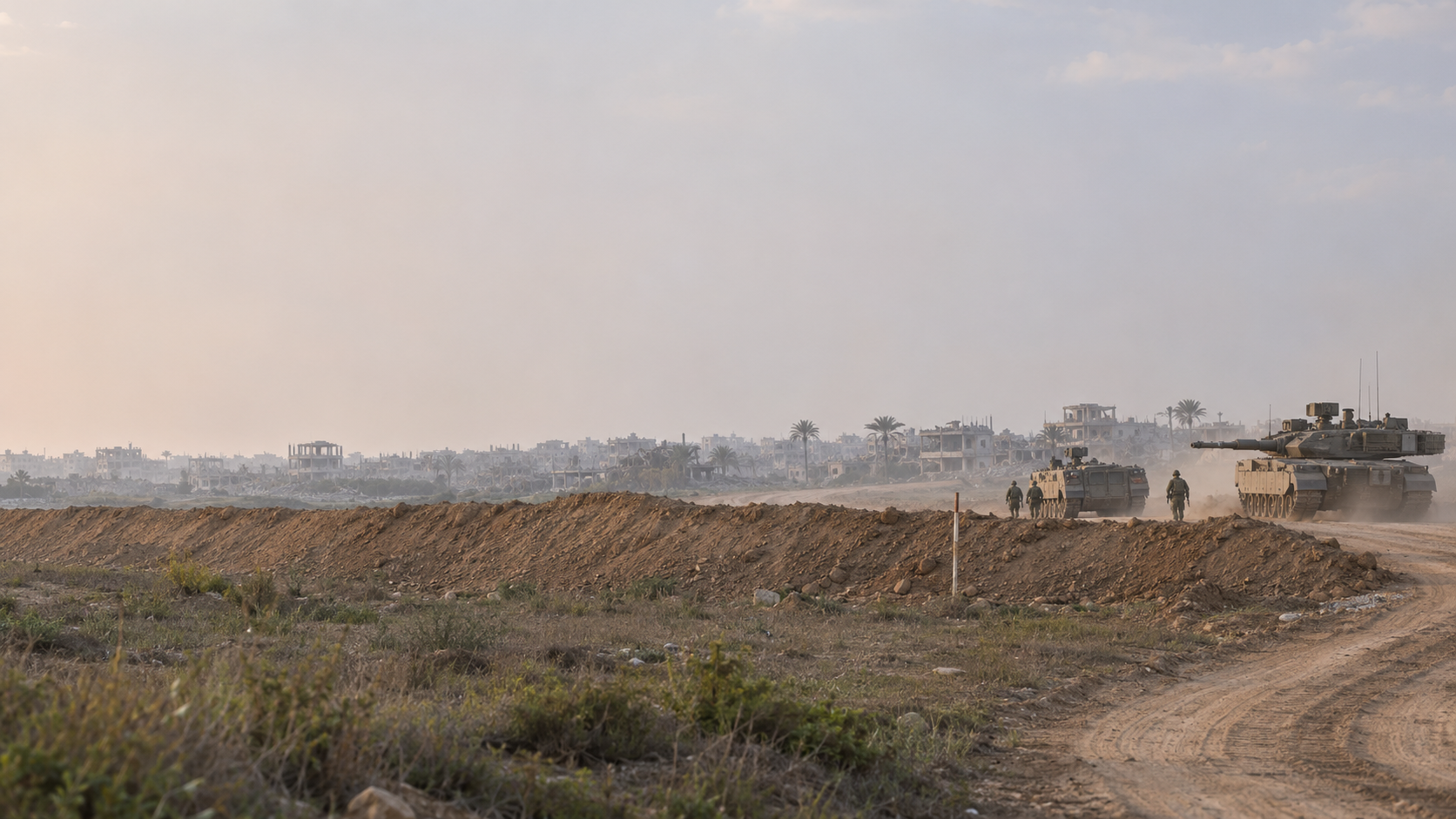
Reports that Israeli tanks crossed the “Yellow Line” into central Gaza have raised questions about the ceasefire’s durability, the meaning of the boundary, and the risks facing Palestinian civilians.
The Guardian, BBC, NBC News, and The New York Times reportedly described an Israeli ground movement beyond the ceasefire demarcation after the truce began. The BBC called it a rare operation beyond the Yellow Line, while NBC News described it as the first reported ground operation since the ceasefire started. These descriptions remain attributed claims pending confirmation from the full original reports and official statements.
The supplied summaries identify November 18, 2026, as the reporting date for the BBC and NBC News items. They do not establish the precise location, duration, military objective, troop movements, casualty figures, or official responses.
What Happened in Central Gaza?
The supplied reports describe Israeli tanks or other ground forces entering central Gaza beyond the Yellow Line, in an area described as being under Hamas control. The accounts establish the broad description of the reported movement but provide limited operational detail.
The following points remain unclear:
- The precise location of the movement.
- The number of tanks or troops involved.
- The operation’s duration and military objective.
- Whether Israeli forces remained beyond the line or later withdrew.
- Whether Hamas or another armed group engaged them.
- Whether the movement was permitted under the ceasefire terms.
- Whether civilians were killed, injured, displaced, or denied access to aid.
These facts will determine whether the event was a limited security operation, a disputed ceasefire violation, or part of a broader escalation.
What Is the Yellow Line?
The Yellow Line is described in the supplied reporting as a ceasefire demarcation separating areas associated with Israeli military control or security arrangements from areas controlled or administered by Hamas.
It should not automatically be treated as a permanent international border. A ceasefire line generally establishes temporary military positions and restrictions without resolving sovereignty, final borders, or long-term governance.
Crossing such a line may violate a ceasefire agreement without constituting a crossing of a recognized international boundary. The consequences can still be serious, particularly when the line affects access to homes, farmland, roads, hospitals, and humanitarian routes.
The Yellow Line’s exact legal and operational meaning depends on the ceasefire agreement, military maps, statements from the parties, and any monitoring arrangements. The supplied source summaries do not reproduce those provisions.
Why Might Israeli Forces Have Crossed the Boundary?
No specific motive should be treated as established without an Israeli military statement or independently verified reporting. Possible explanations include responding to an alleged security threat, searching for weapons or tunnels, locating military infrastructure, recovering equipment or personnel, or preventing an attack.
Israel could also argue that the operation was permitted under its interpretation of the ceasefire. Some agreements allow defensive actions or responses to imminent threats. Whether those provisions apply depends on the agreement’s language and the circumstances on the ground.
A military justification remains a claim by the party conducting the operation unless independently corroborated. Reporting should distinguish between stated rationale and verified fact.
Hamas may characterize the crossing as a ceasefire violation or an act of aggression. It could respond through political statements, appeals to mediators, restrictions near the line, or military action. The supplied summaries do not provide a verified account of Hamas’s operational response.
How the Operation Could Affect the Ceasefire
Ceasefires can weaken through repeated incidents that each side initially describes as limited or defensive. The risk of escalation could increase if:
- Israeli forces remain beyond the line.
- Hamas attacks Israeli forces.
- Civilians approach restricted areas.
- The parties dispute the ceasefire’s terms.
- Retaliatory strikes cause casualties.
- Aid routes or medical corridors close.
- Further incursions occur in central or northern Gaza.
A single disputed crossing may be contained through mediation. Repeated movements could establish a new reality on the ground and make the ceasefire harder to preserve.
Mediators may seek clarification from both sides, verify troop positions, negotiate a withdrawal, establish monitoring arrangements, and press for continued humanitarian access. The supplied material does not identify the mediators or describe their response.
Key developments to monitor include whether Israeli forces withdraw, whether the Israeli military issues an explanation, whether Hamas or another faction claims an attack, whether ceasefire talks change, whether aid deliveries and civilian movement are affected, and whether additional ground operations occur.
Humanitarian Consequences for Palestinians
Civilians living near a military demarcation line face danger even without a large-scale battle. Tank movements can trigger evacuation orders, restrict access to homes, damage roads, and increase the risk from unexploded ordnance.
Renewed activity can also disrupt access to food, water, hospitals, schools, shelters, and workplaces. Families may struggle to determine which areas are safe when military positions shift or warnings are issued without reliable communication.
Ground operations may affect humanitarian convoy routes, food distribution, water access, medical referrals, and emergency response. Hospitals may face difficulties transferring patients if routes near the boundary are closed or considered unsafe.
The supplied source summaries do not provide verified casualty, displacement, or aid figures. Current humanitarian data should be obtained from the United Nations, aid agencies, hospitals, or fully verified reporting rather than inferred from incomplete summaries.
What the Supplied Sources Report
- The Guardian: Reportedly described Israeli tanks crossing the Yellow Line into central Gaza.
- The BBC: Reportedly characterized the event as a rare Israeli ground operation beyond the Yellow Line.
- NBC News: Reportedly described it as the first reported ground operation since the ceasefire began.
- The New York Times: Reportedly described a rare Israeli incursion across the Gaza ceasefire line.
- Al Jazeera: The supplied summary focused on the possible humanitarian consequences of a renewed Israeli ground offensive but did not provide verified casualty or displacement figures.
The descriptions of the event remain attributed to the named outlets. The supplied entries titled “msci standalone,” “josh green,” “sanae takaichi,” “Sinetron Terikat Janji RCTI,” and “alisson becker” contain no verifiable article content or usable evidence for this incident.
Why the Incident Matters
The reported crossing could indicate that Israel is prepared to conduct active operations inside areas nominally covered by the ceasefire. However, one operation does not establish a permanent policy change. That conclusion would require evidence of repeated incursions, new military orders, altered maps, or official statements describing a change in strategy.
The event may also challenge Hamas’s ability to control territory behind the ceasefire line. Administrative control and military control are distinct: a group may govern an area while lacking the ability to prevent a more powerful opposing army from entering it.
Disputes over the Yellow Line could affect negotiations concerning security arrangements, troop withdrawals, monitoring systems, reconstruction access, and governance in Gaza. If the parties cannot agree on where troops may operate, they may also struggle to resolve questions about aid access, demilitarization, and future political authority.
Conclusion
Multiple major outlets reportedly said that Israeli tanks or other ground forces crossed the Yellow Line into central Gaza. The BBC and The New York Times described the movement as rare, while NBC News characterized it as the first reported ground operation since the ceasefire began. Those descriptions remain attributed claims pending full verification.
The incident’s significance depends on what happened afterward. Whether Israeli forces withdrew, whether combat occurred, whether civilians were harmed or displaced, whether humanitarian access was interrupted, and whether mediators preserved the ceasefire will determine its broader meaning.
The reported tank movement should therefore be assessed as both a military event and a test of the ceasefire’s rules. The publication dates, troop movements, casualty figures, official statements, and precise meaning of the Yellow Line require confirmation from full original reports and authoritative sources.
Frequently Asked Questions
What is the Yellow Line in Gaza?
The Yellow Line is a reported ceasefire demarcation separating areas associated with Israeli military control or security arrangements from areas controlled or administered by Hamas. It should not automatically be treated as an internationally recognized border or final territorial settlement.
Did Israeli tanks cross the Yellow Line?
The supplied summaries from The Guardian, the BBC, NBC News, and The New York Times report that Israeli tanks or ground forces crossed the ceasefire boundary into central Gaza. The precise location, duration, and military purpose require confirmation from the full reports.
Was this the first Israeli ground operation since the ceasefire?
NBC News reportedly described it as the first ground operation since the ceasefire began. Because other outlets used terms such as “rare incursion,” the claim should remain attributed to NBC unless independently verified.
Why might Israel have sent tanks across the boundary?
Possible explanations include responding to a perceived security threat, searching for military infrastructure, protecting Israeli positions, recovering equipment or personnel, or enforcing Israel’s interpretation of the ceasefire. The specific motive requires an official statement or verified reporting.
How could the incursion affect Palestinians in Gaza?
Military activity near the boundary could restrict movement, disrupt aid deliveries, delay medical referrals, increase displacement, and create fear of renewed fighting. The humanitarian impact depends on the operation’s location, duration, and whether further combat follows.
Does crossing the Yellow Line mean the ceasefire has ended?
Not necessarily. A limited incursion may represent a disputed violation, a temporary operation, or an escalation without a formal end to the ceasefire. The answer depends on the agreement’s terms, statements from the parties, and whether fighting expands.
Related Articles
-
 Trump, Xi and Putin: APEC Meeting Explained
-
 What the Crimean Bridge Attack Means for Russia
-
 Iran Warns Bahrain Over U.S. Fifth Fleet Presence
-
 Why Trump, Xi and Putin’s Summit Won’t Be Yalta 2.0
-
 Rwanda Migrant Hub Plan Faces Human Rights Backlash
-
 Iran War Updates: Gulf and Tanker Risks Unverified
-
 Israeli Gaza Operation Beyond Yellow Line: What We Know
-
 Florida Coast Could See 18 Inches of Rain by Friday
-
 US Intelligence Chief Rejects State-Sponsored Attack Theory
-
 Cornyn Blocks Trump Texas Judicial Nominee
-
 Hakeem Jeffries Nominated for House Speaker
-
 Trump’s Shenzhen Arrival and Xi’s Family History
-
 Ukraine Reportedly Struck Crimean Bridge Without Starlink
-
 Iran-Kuwait Air Base Attack: What We Know
-
 Putin’s Asia Visit Highlighted by Russian Tu-95 Bombers
-
 Democrats Nominate Hakeem Jeffries for House Speaker